


Sale 15%
Sale 15%




[GLOBAL_MSG_2]
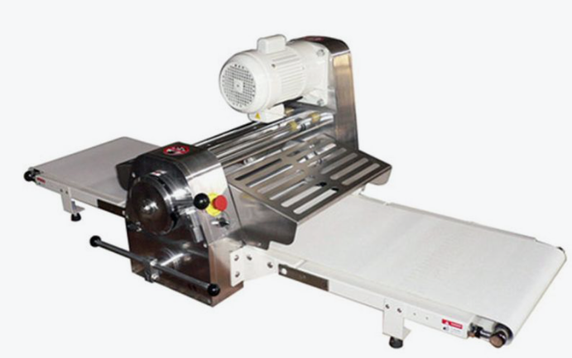
The Yasaki JDR-520B Commercial Benchtop Pastry & Dough Sheeter (500mm Belt Width, 5kg Capacity) is an engineering-grade dough rolling and laminating workhorse designed specifically for Australian artisan bakeries, French patisseries, cafe kitchens, boutique pizzerias, pastry commissaries, and commercial catering kitchens where floor space is at a premium. Measuring 2080 mm Wide x 880 mm Deep x 620 mm High during full-extension operation and weighing a solid 150 kg, this heavy-duty benchtop reversible sheeter processes up to 5.0 kg dough blocks per cycle. Built with a rigid all-metal chassis incorporating commercial-grade structural steel, food-grade stainless steel, and cast aluminium—completely free of fragile plastic body panels—the JDR-520B features heavy-duty 40 mm opening hard-chromed roller cylinders with precision micro-adjustable thickness regulation spanning 1.0 mm to 35.0 mm. Powered by an energy-efficient 375W drive motor operating on a standard Australian single-phase 10A plug-and-play circuit, the unit incorporates food-safe synthetic conveyor belts, bi-directional table arms that fold upright for compact storage, and fully sealed electrical enclosures with internal safety interlocks.
Why Australian bakeries, patisseries, and commercial hospitality kitchens choose the Yasaki JDR-520B:
Standard 10A single-phase plug-and-play operation (375W) — runs on standard Australian 240V single-phase mains power via a factory-fitted 10 Amp plug, completely eliminating the costly electrical infrastructure upgrades associated with 3-phase commercial baking plant.
Heavy-duty 40mm hard-chromed roller cylinders — large-diameter ground hard-chrome rollers resist surface scratching, prevent dough adhesion, and withstand intense rolling pressure without flexing or bowing across the 500mm width.
Precision thickness regulation (1.0 mm to 35.0 mm) — smooth manual thickness control lever allows bakers to step down block butter laminations progressively, from thick initial dough turns down to translucent 1mm filo, pasta, or puff pastry sheets.
Rigid all-metal chassis construction — engineered exclusively from heavy-gauge steel, stainless steel, and high-density aluminium alloys, delivering the structural rigidity required to eliminate chassis twist during high-torque rolling.
Internal wear-resistant locking mechanism — enclosed roller calibration mechanism eliminates exposed external ratchets, preventing component wear from flour accumulation while protecting operator hands.
High-tensile food-grade synthetic conveyor belts — fitted with premium synthetic conveyor belting (vastly superior to traditional moisture-absorbing cotton belts) to resist fraying, oil saturation, bacterial growth, and edge stretching.
Bi-directional folding tables for space efficiency — left and right conveyor tables fold vertically when service concludes, dramatically reducing benchtop footprint and granting unobstructed access to drive rollers and scraper blades for daily sanitation.
Flour-sealed electricals & safety interlocks — ingress-protected electrical switches keep airborne flour dust out of internal contacts, while hinged safety wire guards with integrated microswitches stop roller motion instantly if lifted.
Generous 5.0kg batch processing capacity — handles dense croissant dough, Danish pastry, shortcrust, biscuit dough, fondant, and pizza bases up to 5 kg per rolling cycle to keep production runs on schedule.
2-Year commercial warranty protection — backed by an Australian 2-Year parts and labour commercial warranty with dedicated national equipment service support.
| Feature | Specification |
| Model Code / SKU | JDR-520B |
| Brand | Yasaki Commercial Bakery Equipment |
| Product Type | Commercial Benchtop Reversible Pastry & Dough Sheeter |
| Belt Width | 500 mm |
| Table Length (Overall) | 830 mm per Table Bed |
| Batch Dough Capacity | Up to 5.0 kg per Sheeting Cycle |
| Roller Diameter / Opening | 40 mm Maximum Hard-Chromed Cylinder Opening |
| Adjustable Thickness Range | 1.0 mm to 35.0 mm (Continuous Micro-Adjustment) |
| Conveyor Belt Material | High-Tensile Food-Grade Hygienic Synthetic Belt |
| Chassis Materials | Structural Steel, Stainless Steel & Heavy-Duty Aluminium (No Plastic) |
| Safety Interlocks | Microswitch-Protected Roller Safety Guards (Immediate Motor Cut-Off) |
| Dust Protection | Sealed Motor Housing & Enclosed Dust-Proof Electrical Enclosures |
| Table Configuration | Bi-Directional Dual Folding Tables (Space-Saving Vertical Storage) |
| Operating Dimensions (mm) | 2080 (W) x 880 (D) x 620 (H) |
| Product Net Weight | 150.0 kg |
| Electrical Power Supply | 240V / 50Hz Single Phase; 375W / 10A (Fitted with Standard 10A Plug) |
| Drive Operation | Reversible Dual-Direction Hand-Control Sheeting |
| Food Hygiene Standard | Complies with Australian Food Safety Standard 3.2.2 & AS 4674 |
| Warranty | 2 Years Parts & Labour Commercial Warranty |
To preserve roller precision, prevent belt tearing, and uphold bakery food hygiene:
Mandatory Daily Roller & Scraper Cleaning: Daily inspection and cleaning of the hard-chromed rollers and scraper blades is essential. Allowing residual dough scraps to dry and harden on the rollers creates raised lumps beneath the synthetic belt. These bumps force the belt up against the scraper edges, which can quickly score, catch, and tear the conveyor belt.
Scraper Blade Inspection & Removal: At the close of each shift, unclip the quick-release scraper assemblies. Scrape away soft dough remnants using a food-grade plastic dough scraper, wipe down the scraper edges with a warm damp cloth, and verify that the blade edge remains smooth and burr-free.
Roller Cylinder Care: Wipe the hard-chromed rollers clean with a damp microfibre cloth using warm water and a neutral, food-safe sanitiser. Never use abrasive metal scouring pads, wire brushes, or metal knives on the hard chrome, as gouges will permanently compromise the non-stick rolling surface. Dry the rollers thoroughly after cleaning.
Synthetic Belt Sanitation: Brush loose dusting flour off the synthetic conveyor belts using a soft-bristle pastry brush. For sticky butter residues from laminated doughs, wipe the belt surface with a moist, clean cloth and allow it to air-dry completely before folding the tables.
Table Folding Protocol: Before swinging the conveyor arms into the upright storage position, verify that the table surfaces are free of fallen dough scrapers, rolling pins, or loose tools to prevent mechanical jamming at the pivot hinge.
No Hose-Down Warning: Never wash down the sheeter with a running hose or high-pressure spray gun. Although electrical switches are sealed against airborne flour dust, high-pressure water will enter bearing housings, roller pivots, and motor compartments, voiding warranty protection.
The Yasaki JDR-520B is engineered for straightforward countertop integration into busy commercial bakery production rooms:
Electrical Supply: Operates on standard Australian single-phase 240V 50Hz mains power with an energy-efficient 375W motor draw. Supplied complete with a factory-fitted 10 Amp plug and lead, allowing direct connection to any standard 10A commercial wall outlet without requiring expensive three-phase 415V wiring installations.
Workbench Load Capacity: With a net weight of 150 kg plus active dough batches and dynamic rolling forces, the JDR-520B must be installed on a heavy-duty, structurally braced commercial stainless steel workbench or reinforced bakery table rated for a minimum 250 kg static load capacity.
Operating Clearances: Allow a minimum benchtop footprint of 2100 mm in width by 900 mm in depth to accommodate the fully extended conveyor arms. Ensure clear operator walking space at both ends of the tables so bakers can guide, fold, and catch delicate pastry sheets effortlessly during reverse rolling passes.
Flour Dust Mitigation: The internal motor, drive chains, and control gearboxes are sealed within protective steel cowlings. While protected against standard ambient flour dust, positioning the sheeter in well-ventilated areas away from direct liquid wash-down zones ensures maximum mechanical lifespan.
Due to the unit's substantial 150 kg net weight, precision roller assembly, and heavy crated pallet dimensions, standard commercial road freight is available Australia-wide to commercial business addresses with level ground access or forklift/loading dock facilities. Deliveries to residential or non-commercial addresses require a customised tail-lift freight calculation. Please contact our friendly commercial sales team prior to placing your order to confirm site unloading access, door frame clearances (minimum 900 mm clear opening recommended), or to discuss logistics requirements for regional delivery.
Hard-chromed rollers provide an ultra-smooth, non-porous surface that prevents butter-rich croissant and puff pastry doughs from sticking and tearing during tight sheeting passes. Unlike untreated mild steel, hard chrome will not rust or pit from dough moisture and acidic cleaning solutions. Compared to composite or plastic rollers, heavy solid chrome cylinders maintain uniform micro-tolerances across the entire 500mm width, preventing uneven thickness tapering between the edges and the centre of the sheet.
Yes. The JDR-520B is equipped with an energy-efficient 375W single-phase electric motor and comes pre-fitted with a standard Australian 10A 3-pin plug. This allows venue operators, boutique bakeries, and mobile caterers to operate the machine on any standard 240V 10-amp wall socket without hiring an electrician to install 15A or 3-phase 415V commercial power.
Traditional cotton canvas belts readily absorb moisture, butter, and dough fats, creating a breeding ground for bacteria and causing belts to stretch, cup, and slip on the drive rollers over time. The Yasaki JDR-520B features heavy-duty food-grade synthetic belting that is impervious to grease absorption, easy to wipe down and sanitise, resistant to edge fraying, and dimensionally stable under heavy dough loads.
The single most common cause of belt damage across all commercial dough sheeters is failing to clean the scraper blades and rollers daily. When flour and dough residue is left to harden on the chrome cylinders overnight, it forms solid crusty bumps. During subsequent sheeting shifts, these raised bumps force the synthetic belt against the sharp edges of the scraper blades, leading to deep grooves and ripped belts. Daily scraper removal and roller wipe-downs prevent this issue entirely.
The precision roller adjustment lever provides continuous calibration down to a minimum thickness of 1.0 mm, ideal for delicate Danish pastry layers, puff pastry mille-feuille, pasta sheets, and decorative fondant, while opening up to 35.0 mm (with a maximum roller opening of 40 mm) for initial block butter incorporation and heavy dough breakdown.
N.B Image is for illustrative purposes only. Specifications are subject to change without notice.
Related Products


Maestro Mix
PS450BT 450mm Benchtop Pastry Sheeter Maestro Mix

Maestro Mix
Maestro Mix PS520BT 520mm Benchtop Pastry Sheeter

YASAKI
Request Callback Form